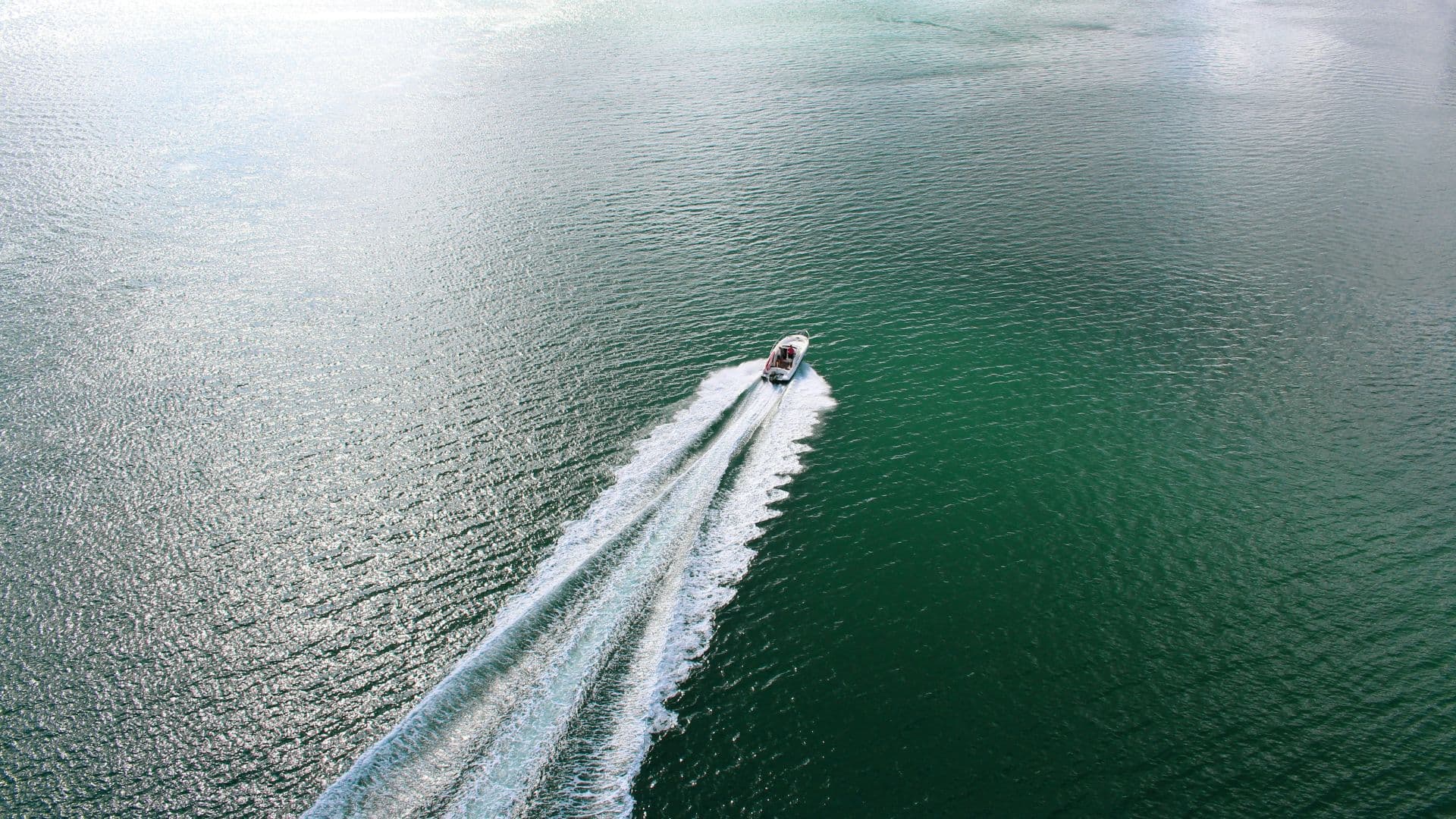
Brands want agencies built like speedboats, not cruise ships
By Lavinea Morris, Managing Director, EMEA, M+C Saatchi Performance
This article was first published in The Drum on 5 February 2026
What happened to the Holdco operating model in 2026? In short, there was a storm of change: Omnicom cut thousands of jobs, Group M restructured, there were multiple mergers and closures as Holdcos consolidated here, and shut up shop there. The churn came with an overarching (and repeating) message of the need for simplification and an equally repetitive narrative of how complex and fragmented the advertising landscape has become. Not wrong, but also not exactly new news.
Fundamentally, there was a move toward fewer people and more tech ‘roadmaps’, with AI workflows taking on the heavy lifting.
While the race to tech simplification continues in the background, brands are seeking alternative solutions to their ongoing performance pain points and moving away from the traditional Holdco ‘cruise ship’ model in favour of quicker, more agile ‘speedboats’ offered by Independent agencies. Between 2019 and 2024, US Ad spending managed by Agency Holding companies dropped from 44.6% to 29.6%, according to EMarketer, and in a recent episode of The Campaign Podcast, between Q1-Q3 2025, Independent agencies accounted for 38% of media wins, compared to 33% in the same period in 2024.
So while the industry debates which networks are simplifying, how and why, brands are asking more practical questions: like who is actually steering the ship, how can we weather uncertain times, and fundamentally, what is our advertising budget actually delivering to the bottom line? In a market this dynamic, a slower ship isn’t “safer”, it’s just slower when both speed and agility are growth strategies.
Cruise Ships vs Speedboats
In 2026, the decisive advantage isn’t simply scale; it’s the ability to react quickly. Media inflation, platform volatility, fragmented audience attention, and AI-accelerated creative cycles have squeezed the gap between insight and action. Brands aren’t struggling because they lack strategy; they’re struggling because their operating models can’t move at the speed the market now demands. That’s why many advertisers are quietly rethinking what they want from an agency partner. Holding groups are brilliant at global governance, standardisation, and process, which can feel like cruise ships: mass-produced with impressive infrastructure and predictable itineraries, but slow to turn when conditions change.
Independents, by contrast, increasingly behave like speedboats: custom-made, bespoke, personalised, closer to the action. Like speedboats, Indies offer speed, adaptability, specialisms, and, fundamentally, agility. By their very nature, Independents are small, adaptable, and hungry for success, not afraid of change, and sporting lean crews that have naturally evolved with the organisational structure.
For marketers under pressure to prove both brand impact and performance delivery, the ability to launch faster, test more, and course-correct weekly (sometimes hourly) is no longer a nice-to-have. While Holdcos are in a pattern of restructuring and mergers, a whole lot of resources are going into internal efforts rather than focusing on their brands and clients. The news has been cluttered with news that has nothing to do with client work.
Scale Used To Be An Advantage, Now It Can Be A Drag
Holding companies built their dominance on scale: buying power, global reach, and the comfort of a large machine that could “handle everything” and simplify the complex. But the landscape just refuses to stop changing, and modern marketers, especially those with a performance remit, have to adapt while traveling at speed. The advantage isn’t how much you can buy anymore. Instead, it’s how quickly you can learn, adapt, and improve outcomes.
Like any race, competitors won’t wait; they will take full advantage of any performance enhancements they can. Advertisers can’t afford to wait for new structures to align or bed in; they need rapid action and adaptability at all times.
Weathering Storms
Having agility to flex rapidly according to client needs or industry change (GEO search, for example, was in its infancy 12 months ago and now has solidified into a revenue stream for those agile enough to ride the tidal wave) means that the skills that Independent agencies can offer, flexibility, agility, and trust, are getting harder to rival.
Amongst the Indies, those with specific knowledge or experience in particular niche genres or corners of the advertising channel spectrum are well positioned to win. For example, agencies with specialist social commerce, mobile, performance, or retail media teams can capitalise on this moment and their deep knowledge. As a result, cruise ship generalists are likely to struggle to cut through. Why? Media, or at least ‘traditional’ media as we have known it, is getting torn apart. Rising costs, advances in tech, and ROAS results plateauing are a perfect storm for advertisers to demand something different from their agencies.
In the performance media world, subscription businesses are among the least forgiving environments for growth. They live and die by efficiencies; everything from Customer Acquisition Cost, Conversion Rate, LTV, ROAS, payback windows, and churn rate is under the microscope at all times.
These brands don’t need an agency that can support global governance; they need an agency that can answer questions quickly and with confidence, such as ‘which channel will deliver the highest ROI in the last 4 weeks of the year’. They need teams that can fulfil a request to have a programmatic Digital out of Home campaign running in Times Square by tomorrow, with the ability to measure the impact on incremental new customers by the end of the week.
Changing Itineraries
An uncomfortable truth: the platforms are no longer just selling inventory. They’re building tools to automate the work agencies used to own.
Traditional agency models are under threat thanks to ongoing automation and optimisation. The take from The Wall Street Journal is that ‘the race to automate advertising poses a threat to the giant agency holding companies that have for decades dominated that work’.
This has two potential implications: first, more brands will manage more of their advertising in-house. Second, the value agencies can provide will be evaluated based on what can’t be automated, i.e., strategy, testing, innovation, proprietary tech, and expert teams. Bespoke, experienced teams will be a stronger differentiator and measure of success in the future, all of which are offered by the Indies.
Let’s Talk About the Crew
And then there are the people. We’re seeing a hemorrhaging of talent from the industry, making remaining resources more stretched than ever. The good news is that for Independent agencies still hiring, the talent pool just got larger and deeper, meaning experienced people are being scooped up and away from the Holdcos. A significant benefit for clients working with independents is their people, experts who power their client success.
From a structural or operational point of view, Independents tend to have an advantage; they are less siloed, with full integration between teams and departments at their core. Holding Companies can attempt to recreate this for clients (that are big enough), by changing the model and renaming the teams. However, this approach is fighting against an institutionalised framework that has worked for decades, and the change is slow to turn.
What Should Brands Demand From Their Agency Ships In 2026?
If you’re a brand considering an agency change this year, the most important question perhaps is no longer “Who can buy the most media at the most efficient price? And instead could be: “Who has the most experienced team closest to the tech, and the agility to adapt quickly when the market changes from one day to the next?”
Because this next era in this advertising adventure will be defined by the agencies that can think quickly and adapt at speed, providing clear, measurable campaign performance through the combination of people and tech. After all, cruise ships are still impressive, but speedboats are faster and give more control at the helm.

Let's Talk
* Required