Can creatives use AI without losing their edge?
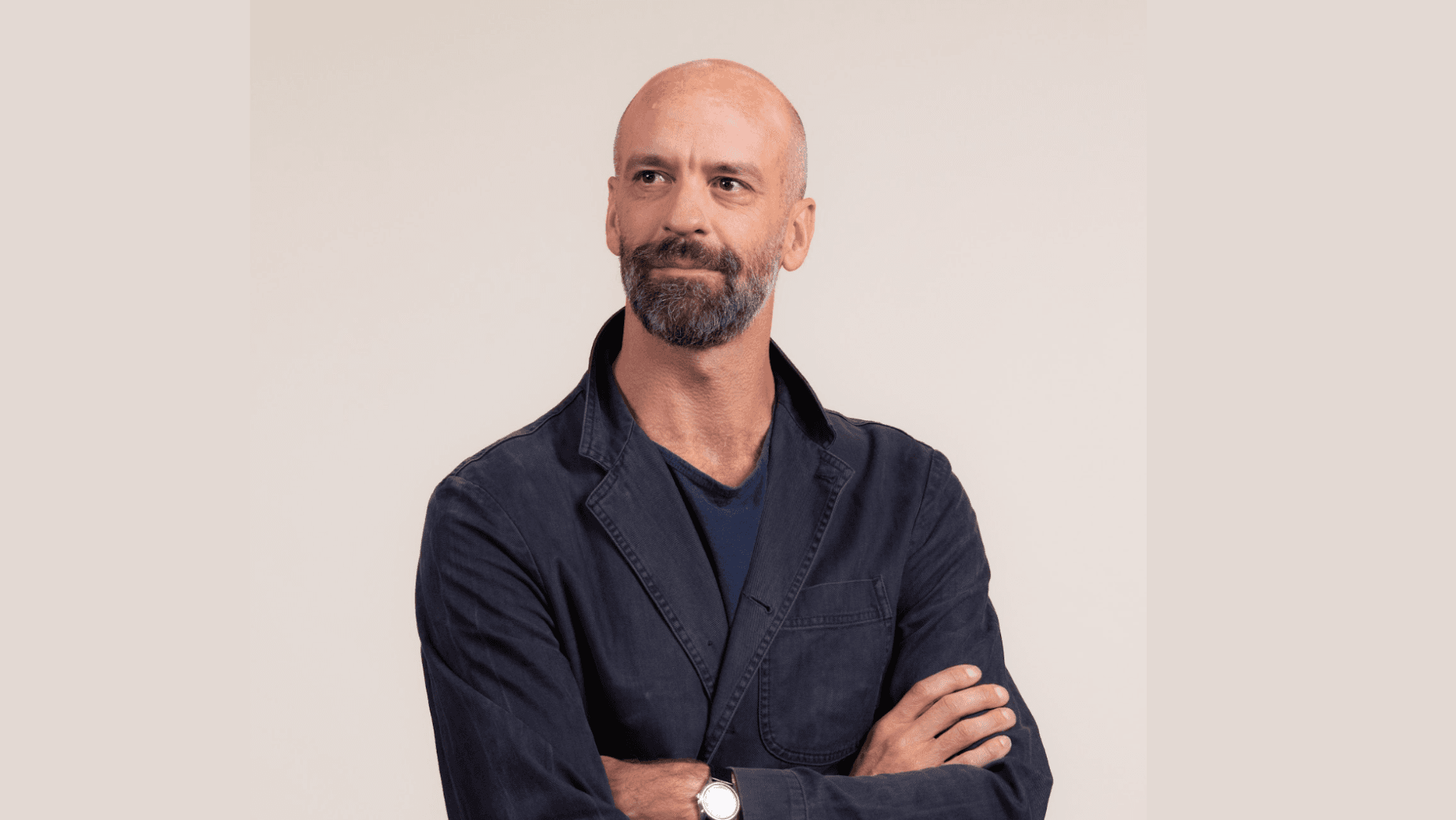
By Rob Doubal, Joint Global Chief Creative Officer, M+C Saatchi Group
This article was first published in LBB Online on 26 November 2026
A study published by MIT suggests that as AI usage increases it might erode our ability to think critically and creatively. The catch-22 is that as AI adoption increases, it will be even more important to be able to think critically and creatively in order to find the right balance between embracing its efficiencies and capabilities while maintaining our crucial human oversight. AI’s current limitations are already in the spotlight, as the divestment in AI stocks in recent weeks would suggest, however AI usage is obviously set to increase in the long term.
Closer to home, the ‘threat and promise’ of AI seems to be posing more of an existential crisis to the agency landscape than its current implementation is. The knock-on effect has been mega-mergers which have put strain on the industry at large. The pressure to prove efficiencies is currently greater than the profitable development of practical creative and strategic AI solutions, and this delta is causing job instability.
Ironically, the root cause is that the strand of AI which is sweeping our industry - ‘machine learning’ - is simply an incredibly strong rebrand of ‘IT’. It’s right to say that used appropriately, it’s a force that is revolutionising human development.
However, when AI is thought to be an omni-solution for entire industries, it risks a race to the bottom and will force a premium on raw creativity. Hence, we see a bifurcation of big and small agencies – and rightful cries that raw human creativity is simply irreplaceable. It's why the world’s best creatives are unmatched at creating the best work because ideating, crafting, creating, rebelling, re-energising and reforming remain uniquely human skills. Furthermore, creativity will always be an important feature of AI’s development (it was surely creativity which gave birth to it), and the machines still have a lot more to learn. Creativity will always remain at the forefront of change.
So, with this being the case, I take a fully committed approach to AI, but with a foot firmly nestled in both camps.
On one hand, we must embrace AI. I’ve never met a good creative who isn’t interested in new ways to bring their creativity to life. So, we must learn about it, experiment with it, harness it and create with it at every opportunity. But imitation, and replication (the DNA of machine learning) have their limits.
So, on the other hand, we need to spend more time than ever furthering the activities and methods of inspiration and creation which have helped us succeed for the last 300,000 years. Next-gen AI development will require as many philosophers, poets, artists and creatives as this first LLM-dominated phase. The news that Yann Le Cuns (Meta’s chief scientist), is set to leave to lead a start-up to explore ‘world models’ which look beyond the limits of LLM’s and more closely at how humans work is testament to the direction of the next phase. It’s about more human learning.
So, visit art galleries, read books, go for a walk. Talk to real people. Ask a child. Study behaviour. Draw it on paper. Learn how to sculpt. Study philosophy. Devour books. Study the masters. Rip something out and put it on a wall. Make with your hands. Build things. Keep creating new and different things every day. Creativity is the force which drives our species forward.
Continue to trust your intuition, relish in your memories, revel in your contrarian nature. For an organism with such a strong survival instinct - surely the answer is to both embrace AI, and to shun it with all your might? We humans are used to holding two ideas in our head at the same time. You don’t have to pick a side. Jump in with both feet to survive.
Services
Region
Global
Let's Talk
* Required