New research reveals that culture drives over a third of brand value, and now it can be measured
M+C Saatchi Group and Oxford Saïd Business School unveil Return on Cultural Power at Cannes Lions: the first empirical framework to precisely measure culture’s commercial impact.
Nearly a third of a brand’s value is created in culture, and for the first time, businesses can measure it.
New research from M+C Saatchi Consulting and Oxford Saïd Business School’s Future of Marketing Initiative finds that 32.8% of the variance in brand equity can be explained by cultural structure and dynamics, even after accounting for established drivers.
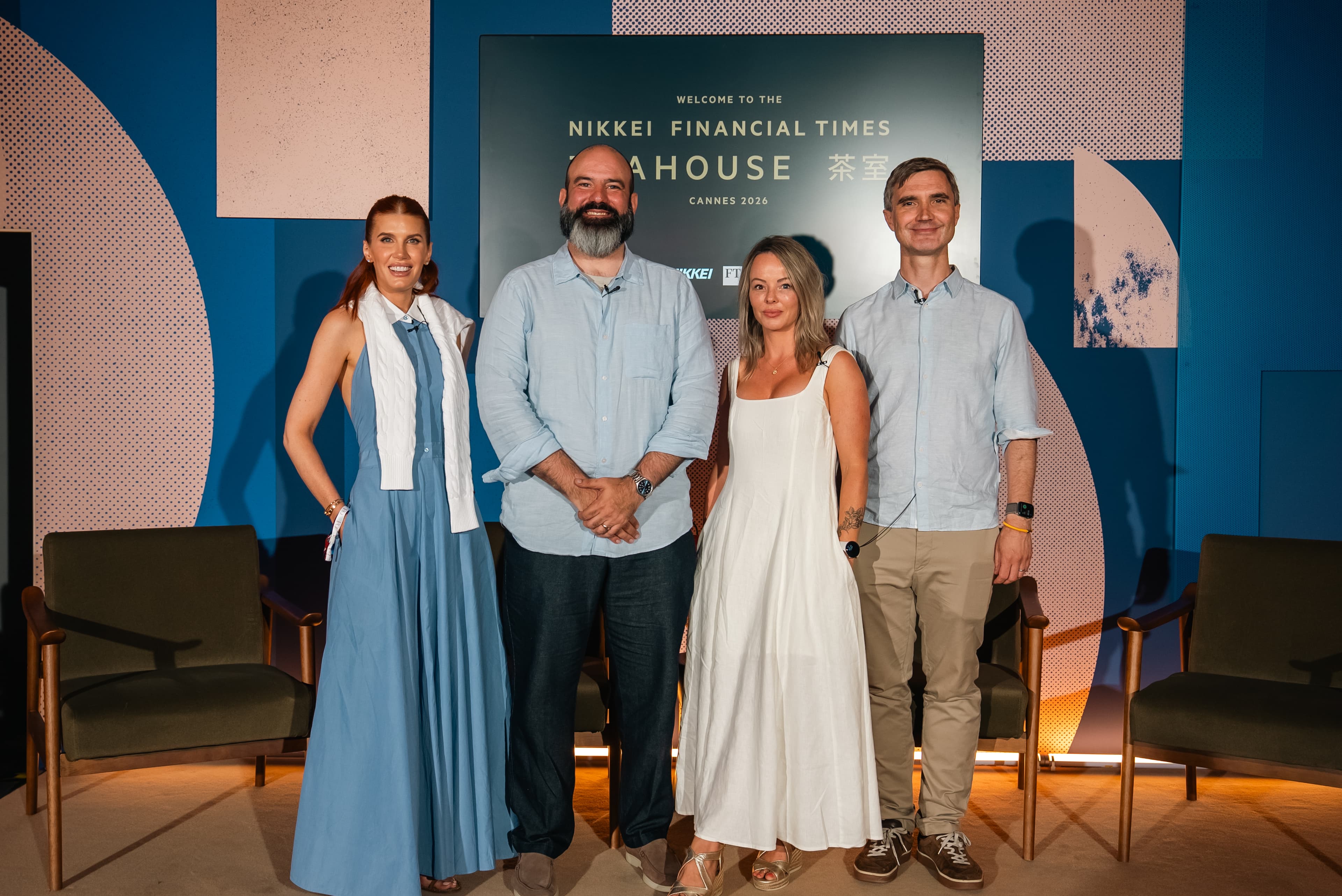
The findings were unveiled on 22 June at a Financial Times event at Cannes Lions, in a panel bringing together the academic verification, the agency application and the creator platform: Dr Felipe Thomaz of Oxford Saïd Business School, Karen Boswell of M+C Saatchi, and LTK co-founder Amber Venz Box.
The result of nine months of joint research, the study introduces Return on Cultural Power (RoCP) a framework designed to make culture measurable, accountable, and commercially actionable.
THE MEASUREMENT GAP
Traditional brand metrics - awareness, consideration, sentiment and share of voice - were built for a slower era. Today, brands can gain or lose relevance in weeks as communities accelerate trends, demand and backlash in real time.
This research argues that existing measures are fundamentally lagging indicators: brand trackers reflect what has already happened, while quarterly financials arrive too late to explain why. RoCP is designed to measure the live cultural signals between the two, treating culture as a leading business indicator rather than a marketing by-product.
NOT A VANITY METRIC
RoCP defines Cultural Power as a brand’s ability to influence behaviour through communities, participation and shared meaning.
Rather than relying on what individuals say in surveys, the framework measures what communities collectively do with a brand and connects those behaviours directly to commercial outcomes.
“For years we’ve measured what brands say about themselves and what individuals say about brands. What we’ve lacked is a way to measure what’s happening around a brand in culture as it happens. Return on Cultural Power creates that missing link between long-term brand building and short-term performance.”
Karen Boswell, Global CEO, Experience & Media; Group Lead for AI and IP Development, M+C Saatchi
HOW IT WORKS
The model combines three layers of data: traditional brand metrics, cultural signals from platforms and communities including Reddit and Discord, and behavioural indicators such as search and sales activity.
Where gaps emerge between cultural momentum and commercial return, a diagnostic framework developed by M+C Saatchi, the 6C framework (Conviction, Connection, Credibility, Coherency, Collaborators and Cut-through) helps identify how to close the gap.
“Meaning and behaviour are shaped collectively through communities and participation, not just within individual minds. This collaboration allowed us to measure those dynamics systematically and connect them to tangible business outcomes. We will publish the methodology and model specification so the findings can be properly scrutinised.”
Dr Felipe Thomaz, Associate Professor of Marketing, Oxford Saïd Business School
SEEN EVERYDAY ON THE CREATOR PLATFORM
“The findings describe what LTK sees every day that culturally powerful brands are built through genuine, sustained community participation with creators, not by renting attention in a passing moment.”
Amber Venz-Box, Co-Founder & President, LTK
FROM INSTINCT TO EVIDENCE
The research challenges the assumption that familiarity alone signals cultural relevance. Brands may remain highly recognised while losing active participation within communities.
“I sit in rooms with CEOs & CMOs making decisions on backward-looking data. This gives leaders a clearer way to assess when to enter a cultural moment, when not to, & what the likely return will be.”
Rhonda Hiatt, CEO, M+C Saatchi Consulting
WHAT IT MEANS FOR LEADERS
The findings suggest Cultural Power should now be measured alongside traditional business metrics as communities increasingly shape demand, reputation and risk.
With culture accounting for nearly a third of brand value, the question for leaders is no longer whether culture matters, but the cost of failing to measure it.
Further findings and modelling from the Return on Cultural Power framework will be released in September 2026.